01
Contain the problem, not just the alert
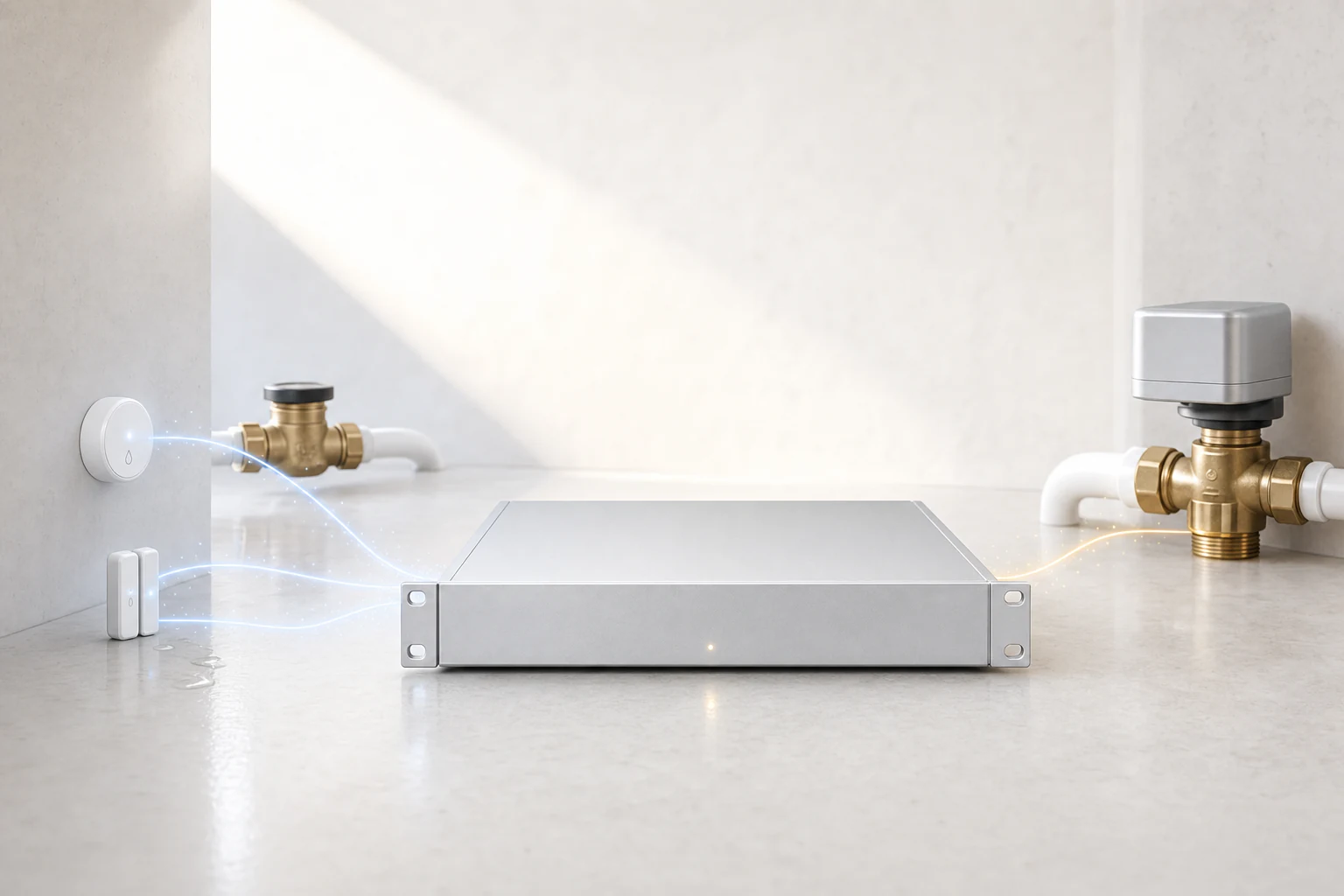
When independent signals agree, an approved policy can coordinate a bounded response—then compare the reported result with what was intended.
STONEHALL ONE · COORDINATED PROTECTION
Moisture, flow, and household state became one verified response.
PRODUCT DEFINITION
Stonehall One is a pre-launch intelligence and coordination controller for professionally designed properties. It is intended to learn from available system behavior, suggest useful policies, coordinate approved actions, and keep the reported outcome in view.
Specialist systems keep doing the work they do best. Stonehall does not silently create high-impact rules, certify third-party equipment, or make every property behave the same way.Available device states are related to rooms, routes, equipment, utilities, and household modes so separate products can contribute to one useful situation.
Stable patterns can become evidence-backed proposals that show the systems affected, the exceptions preserved, and what would need approval before anything changes.
Commissioned policies coordinate compatible systems within explicit bounds. Reported outcomes and unresolved exceptions stay visible instead of disappearing inside separate apps.
HOW IT OPERATES
Stonehall can turn stable patterns into reviewable policies, then coordinate only what has been approved. Each outcome either produces a clear receipt or leaves an exception visible.
OBSERVE
Available device states are normalized and related to the rooms, equipment, people, permissions, and dependencies established during commissioning.
LEARN
Where enabled, repeated system behavior and manual adjustments can reveal a consistent pattern without turning one unusual event into a rule.
PROPOSE
A proposal explains the evidence, affected systems, timing, exceptions, safety bounds, and how the result would be checked.
APPROVE + COORDINATE
Once reviewed and approved, deterministic triggers and guards coordinate compatible systems. The assistant does not improvise inside the control loop.
VERIFY + REFINE
Reported states, credential use, and unresolved exceptions stay visible. Outcomes can inform a new proposal, but active policies never silently rewrite themselves.
Active high-impact policies do not silently rewrite themselves. Internet service, vendor clouds, subscriptions, manufacturer interfaces, and third-party policies can still affect availability.
LEARNED ASSISTANCE · 01 OBSERVE
Repeated system behavior becomes evidence, not a command. Stonehall drafts what could help and waits for approval.
01 · OBSERVE
Across repeated evenings, device states begin forming a stable sequence.
01 · OBSERVE
After the dog comes in, four doors lock, downstairs lights go dark, and the upstairs settles.
02 · UNDERSTAND
On Tuesdays, one household member returns later through the mudroom.
02 · PROPOSE
The proposed Night Close shows every system, timing rule, exception, and verification step.
03 · APPROVE
Nothing changes from observation alone. The policy becomes active only after review.
03 · COORDINATE
Locks, lights, climate, access, and the pet route move together inside the approved rules.
03 · VERIFY
Reported states confirm what finished and keep any unresolved exception in view.
CORE CAPABILITIES
Protection, learned assistance, resource management, trusted access, security, and service become more useful when the property can coordinate the whole outcome.
When independent signals agree, an approved policy can coordinate a bounded response—then compare the reported result with what was intended.
Stable patterns across available system events can become useful proposals before the household has to think about programming them.
Compatible energy, water, irrigation, climate, battery, and vehicle systems can coordinate around utility periods, commissioned watering windows, weather, reserve targets, and departure needs.
Assigned credentials can be limited by schedule, entrance, route, alarm partition, and equipment scope, then expired after the door or gate reports closed.
Access, camera, motion, network, schedule, and property-state signals can be correlated so an approved response reflects the situation instead of one isolated alert.
Equipment context, response history, a service brief, scoped access, and post-service reported states can remain together instead of becoming five disconnected handoffs.
PRODUCT INSPECTION
Stonehall One is pre-launch. This view separates established product responsibilities from engineering targets and the property-specific decisions made during commissioning.
“Confirmed” identifies a current product role or boundary—not an unpublished hardware specification.
EQUIPMENT-ROOM CONTEXT
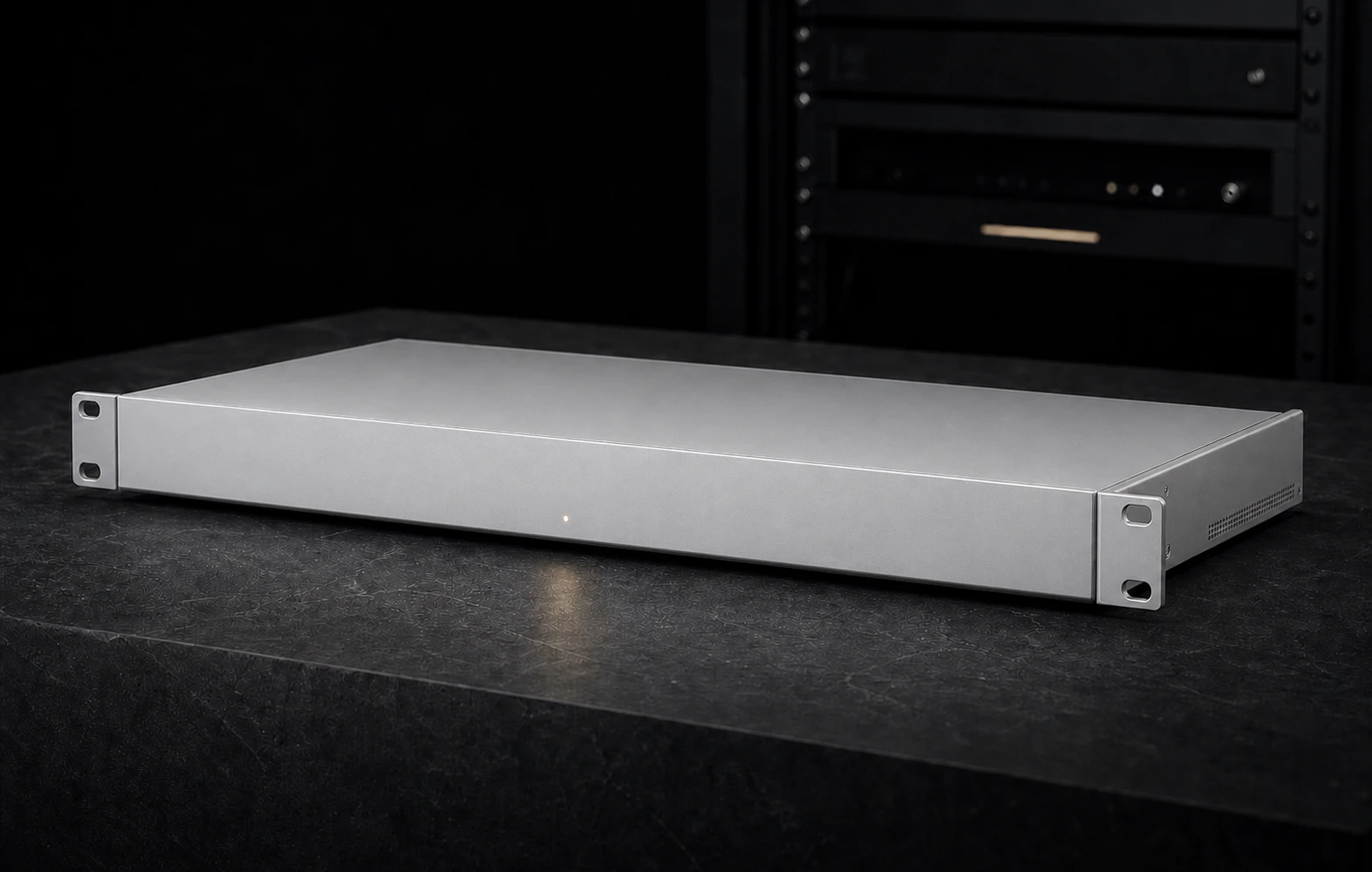
Stonehall One is intended for professional equipment-rack placement, giving the property’s coordination logic a deliberate, serviceable home away from living spaces.
COMPATIBILITY EVIDENCE
Stonehall reviews how each system can participate, what the coordination should accomplish, and how the finished behavior will be validated in the property.
Review by system family
Use Tab to enter the filters, then the arrow keys to move.
Showing 13 coordination paths across all system families
Scroll horizontally to compare the evidence fields
| Coordination path | Example behavior | Commissioning validation | Status |
|---|---|---|---|
| Lighting & livingCoordinated atmosphere and comfort, shaped around the rooms people actually use. | |||
| Lighting and shade scenes | A supported evening scene can adjust selected lighting and shades together while familiar room controls remain available. | Confirm exact equipment and interface access; test scene recall, manual overrides, timing, and recovery after an interruption. | Property review |
| Climate and occupancy context | Available occupied or away state can inform supported comfort settings without replacing equipment-level safeguards. | Confirm writable control points, equipment limits, manual priority, restoration behavior, and the intended room-by-room scope. | Interface-dependent |
| Audio and room routines | Supported audio zones may participate in arrival, entertaining, or wind-down routines as one part of a wider scene. | Confirm zone availability, account and network dependencies, startup behavior, volume boundaries, and a quiet fallback state. | Interface-dependent |
| Security & networkUseful context from supported access, awareness, and network systems—without blurring safety boundaries. | |||
| Scoped service access | An assigned credential may be limited to an approved window, entrance, route, and alarm partition, then expired after the configured closeout state. | Confirm owner authorization, credential lifecycle, door or gate readback, relock guards, privacy expectations, and independent access operation. | Interface-dependent |
| Security context and response | Available door, motion, camera-derived, schedule, and property-state signals can be correlated before an approved lighting, retention, or notification response runs. | Review event sources, privacy expectations, false-trigger handling, notification boundaries, and independent security operation. | Property review |
| Network service visibility | The commissioning target is a clearer service picture for selected network-dependent systems and their known dependencies. | Define monitored equipment, access permissions, useful service states, outage behavior, and who should receive an exception. | Pre-launch target |
| Energy & utilitiesSupported resource signals can inform routines while equipment and safety controls retain authority. | |||
| Peak demand and reserve priorities | Available tariff periods, meter state, battery reserve, and weather context may coordinate supported flexible loads while preserving commissioned priorities. | Confirm the state source, allowed control scope, equipment safeguards, manual controls, restart behavior, and an appropriate fallback. | Interface-dependent |
| Mobility and charging context | Where charging state is available, it may participate in arrival, away, or energy-aware routines without replacing load planning. | Review the installed charger, available account or interface path, property load plan, electrician requirements, and owner priorities. | Property review |
| Water and irrigation windows | Compatible irrigation may follow commissioned local watering windows while available forecast and soil conditions adjust eligible schedules. | Confirm the authoritative schedule source, address and region, controller interface, landscape constraints, manual override, and how rule changes are reviewed. | Property review |
| Utility exception awareness | Available water, power, or equipment signals may contribute to a configured alert or property response. | Validate the source, notification path, escalation rules, network dependency, and the continued independence of certified protection. | Interface-dependent |
| Property infrastructureThe coordination, commissioning, and service layer that makes the finished experience understandable. | |||
| Equipment-room coordination | Stonehall One is intended to provide a defined coordination point while connected specialist systems continue their own core operation. | Confirm equipment location, rack fit, power, network, thermal conditions, service access, and the final engineered controller requirements. | Pre-launch target |
| Schedules and property modes | Configured home, away, arrival, or quiet modes can coordinate eligible systems while preserving explicit manual overrides. | Review time and location assumptions, transition rules, manual priority, exception handling, and recovery after restart. | Property review |
| Commissioning record and handoff | Accepted routines, dependencies, and operating boundaries can be documented as part of the commissioned property experience. | Agree the system inventory, responsible parties, routine acceptance checks, owner handoff, and any ongoing care scope. | Property review |
Compatibility is confirmed during a property review. These examples describe possible coordination—not vendor certification, endorsement, or guaranteed availability. Exact behavior depends on equipment, software versions, available interfaces, permissions, licensing, network conditions, region, and commissioning.

TRUSTED AUTONOMY
Stonehall acts only inside commissioned policies the household can understand, approve, and reverse.
TECHNICAL DETAILS
Stonehall One is still being finalized. Hardware, software, features, installation requirements, included services, availability, and appearance may change before launch. Fields not listed as final remain pending engineering.
Exact capabilities are documented for each commissioned property. Nothing on this page replaces a compatibility review or final system design.
View the complete technical recordPROPERTY FIT
A useful system begins with the actual home graph: installed equipment, available history, control paths, readback, household priorities, and the boundaries that should never be crossed.
EXISTING INTEGRATED HOME
Relevant when lighting, climate, access, audio, video, network, or other installed systems are capable but do not behave as one property.
STONEHALL REVIEWS
RENOVATION
Relevant when an active project creates room to rationalize controls, infrastructure, and responsibilities while changes are still practical.
STONEHALL REVIEWS
NEW CONSTRUCTION
Relevant when the intended property experience can be defined across disciplines before individual systems are selected and commissioned.
STONEHALL REVIEWS
PROPERTY FIT REVIEW
Stonehall maps the available signals, controllable systems, household priorities, policy boundaries, and measurable opportunities before recommending a design.